
Educational Resources
This is a space for educational resources derived from our research initiatives that help to improve understanding. Our work is not limited to scientific frameworks; it is also about how biological difference interacts with environments and systems.
Education is one of the largest systems shaping developmental outcomes.
The Neurotopia Project and Divergent Genomics are exploring how learning environments, sensory needs, developmental differences, cognition, communication, and biological diversity intersect - and how education systems can be inclusively redesigned to support a wider range of learners.
Future resources will explore how genomics, neurodevelopment, sensory processing, metabolism, environment, and educational systems interact to shape learning, wellbeing, and long-term outcomes. This will be a variety:
Resources & templates
Articles
Learning Resources
Inclusive Education
Advocacy Tools
Workshops


Neurodevelopment
Investigating brain growth patterns and genetic influences.


Connective Tissue
Exploring structural biology and tissue resilience.


Folate Metabolism
Mapping biochemical routes impacting health outcomes.
Immune Function
Studying immune responses in diverse biological contexts.
→
→
→
→
Preprints
Two of our papers are currently available as preprints. They have been publicly archived and made available for reading and citation, but have not yet completed external peer review. This route is chosen to make the work accessible while developing a broader independent research programme outside institutional infrastructure. Journal submission is a separate and often time-intensive and potentially financially expensive process. The publication strategy is therefore staged: existing preprints remain available as transparent working scholarship, while future major papers are being prepared with peer-review submission in the future.
Autism, or Pathologised Evolution?
This paper re-evaluates autism through ancestral genomic introgression, pharmacogenomics, epigenetics, and a systems neurobiological lens.
Rethinking Folic Acid Fortification
This paper examines folic acid fortification through a pharmacogenomic, biochemical and policy-based lens, with nuanced attention on how unadjusted confounders distorted the data justifying global policy.
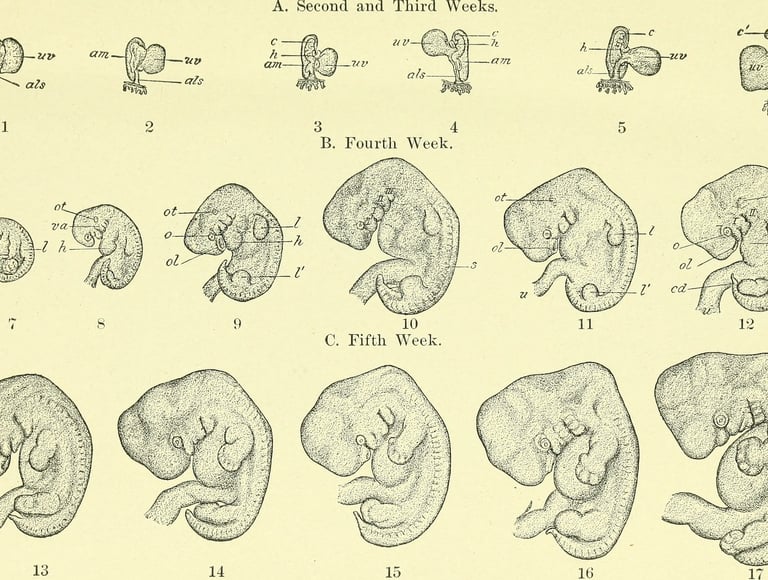
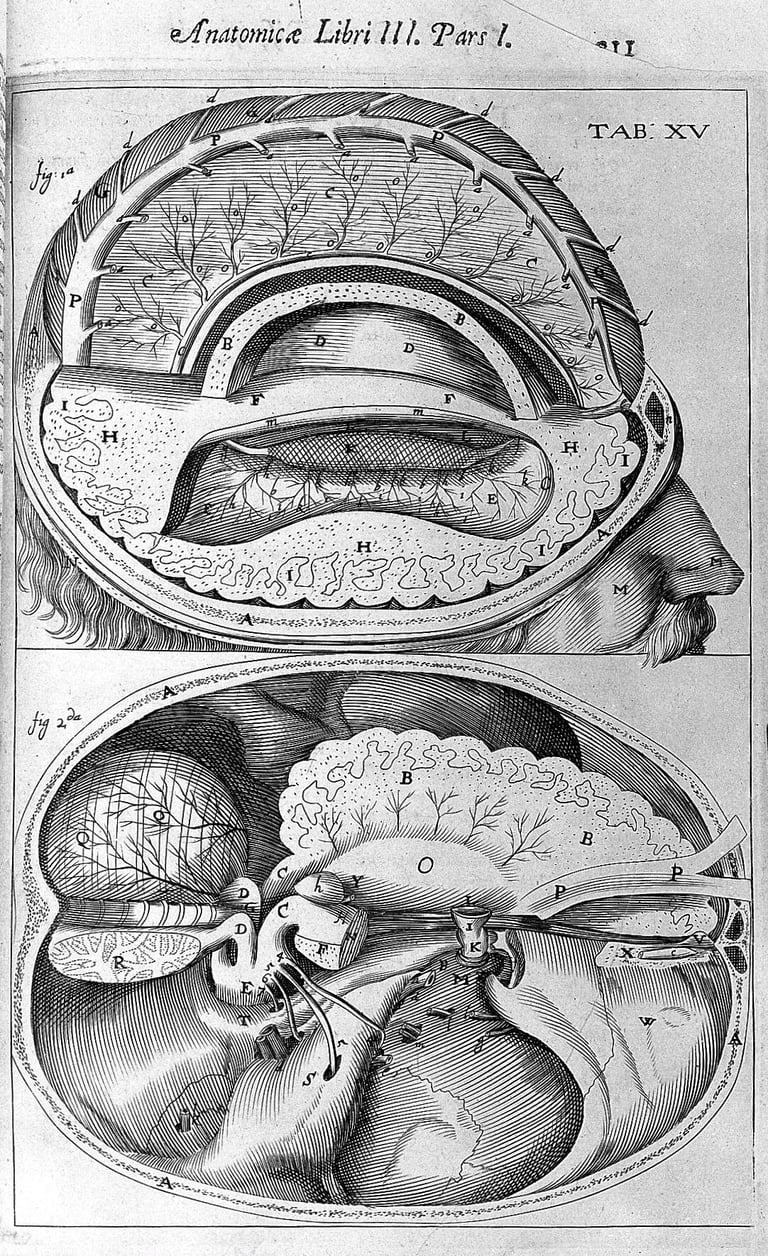
Image credit: (Above/left) John Clement Heisler, A Text-book of Embryology for Students of Medicine, 1907; (right/below) Nathaniel Highmore, Corporis Humani Disquisito Anatomica, 1650
Contact
Reach out with questions or collaboration ideas.
AChambers@divergentgenomics.org
© Alexandra Chambers 2026. All rights reserved.