
The Infrastructure of Invalidation: The Psychology of Systemic Gaslighting and Moral Injury
An article exploring the complexity of systems from a psychosocial perspective, discussing gaslighting, moral injury and healing through cognitive autonomy
PSYCHOLOGYSYSTEMS
Alexandra Chambers
6/9/20264 min read
Gaslighting is often recognised as an interpersonal phenomenon: one individual distorts, denies or manipulates another person’s perception of reality until the targeted individual begins to doubt their own judgement. However, Invalidation can also operate structurally, through institutions, professional systems, cultures, workplaces and bureaucratic processes. When repeated over time, this form of invalidation can become psychologically injurious, particularly for people who are vulnerable, traumatised, neurodivergent, disabled, ill or socially isolated.
There is a specific psychological violence in gaslighting intelligent and morally perceptive people. This activates righteous rage because the person is not only being misunderstood; they are watching reality being distorted in real time. Yet the same system that creates the distortion often punishes any visible reaction to it. Repeated moral injury produces a bottleneck: the injustice cannot be corrected, the anger cannot be safely expressed, and the person cannot simply stop knowing reality for what it is. They are trapped in a cul-de-sac of awareness, where suppression damages them internally and expression risks further punishment. That is why the experience can feel unbearable. It is because they are being asked to contain a contradiction that no healthy mind can peacefully absorb.
Repeated invalidation informs the nervous system that clarity is not enough. Accurate perception is arguably more tormenting for the individual if the surrounding environment has only a preordained static version of themselves that it is prepared to accept. This is one reason why chronic invalidation can become a foundation for complex trauma. The injury arises from being required to exist in an environment where context is continually denied, minimised or rewritten.
This is especially important when invalidation is embedded within infrastructure. In such contexts, harm may be delivered through policies, forms, thresholds, letters, scripts, professional language, delayed responses, inaccessible systems or institutional procedures. The presentation may appear neutral, but the effect may be deeply destabilising.
At interpersonal level, grey rocking is a technique used by people to protect themselves from social psychological manipulation. At institutional level, an inversion occurs: a significant form of administrative grey rocking is deployed against the public. They respond to distress with procedural flatness, delays, scripts and templates that avoid complexity. The person becomes increasingly distressed because their reality is not being engaged with, while the institution appears calm, neutral and reasonable. The emotional burden is displaced onto the person engaging, and their reaction is then treated as the problem.
A system can harm a person while appearing calm, procedural and reasonable.
Many forms of psychological harm are hidden by the very systems that produce them. A welfare process may describe itself as evidence-based while repeatedly disregarding lived reality. A medical system may claim objectivity while dismissing symptoms it has failed to investigate appropriately. An educational system may present itself as supportive while requiring children to adapt to environments that are intolerable to their nervous systems. A workplace may use the language of professionalism while punishing legitimate distress. A family may describe itself as empathetic, while chronically undermining one member’s perception of reality.
In each case, the harm is the repeated denial of a person’s reality by an environment with greater social, professional or institutional authority. When this occurs over time, the individual may feel trapped in a state of unresolved awareness.
When people begin to recognise the scale of the invalidation they have experienced, they often look outward for repair. They may want the person who harmed them to admit what happened. They may want the institution to acknowledge its failure. They may want a professional, family member, employer, tribunal, clinician or social system to validate the reality they have been forced to defend.
This desire is understandable; complaint processes, legal remedies, advocacy, collective witnessing and public exposure may all be necessary in different circumstances. Structural harm should not be reduced to individual healing exercises, and people should not be asked to quietly internalise injustice in the name of resilience. However, there is also a difficult psychological reality: the systems that cause harm are not always capable or willing to name it. The people who distort reality are not always willing to accept truth. Institutions may protect themselves, and families may preserve their own narratives. Professionals may defend their frameworks, and bureaucracies may continue to prioritise procedure over truth.
For this reason, healing cannot depend on external recognition.
This may also aid in explaining what is often described as justice sensitivity, especially in neurodivergent populations. This sensitivity may reflect an acute perception of inconsistency, unfairness and moral contradiction within social or institutional environments. Yet such perception is frequently pathologised as emotional dysregulation, oppositionality or hypersensitivity. Further reframing legitimate distress as individual dysfunction rather than a rational response to sustained invalidation.
This is where the concept of cognitive autonomy becomes important. Cognitive autonomy herein refers to the process by which a person begins to reclaim authority over their own perception after sustained invalidation.
It is the internal shift from “I need the system that harmed me to confirm my reality before I am allowed to trust it” to “I am allowed to know what I know, even if system(s) refuse to recognise it.”
This is not a simple process because gaslighting erodes self-trust, and trains people to seek permission from unreliable mirrors. It makes them dependent on external validation from people or systems that may never provide it honestly. The deepest harm is that the person is gradually separated from their own internal authority. Reclaiming that authority is therefore a necessary part of repair. It may involve documenting patterns, seeking safe witnesses, developing language, learning to recognise coercive dynamics, regulating the nervous system and distinguishing between accountability and dependency on acknowledgement. It may also involve accepting that some systems can be challenged externally without being allowed to remain the final authority internally.
Pursuing justice and reclaiming self-trust are not opposites - they are complementary. A person can continue to name harm, challenge systems and demand accountability while also refusing to let those same systems define the limits of their reality.
The goal is the removal of the invalidating structure from inside the self, and cognitive autonomy is a form of reclamation.
The infrastructure of invalidation is powerful because it teaches people to abandon themselves. Healing begins when that abandonment is interrupted. The external system may still need to be confronted, and the injustice may still need to be documented. However, the person no longer has to wait for the gaslighter, the institution or the wider culture to validate what is real.
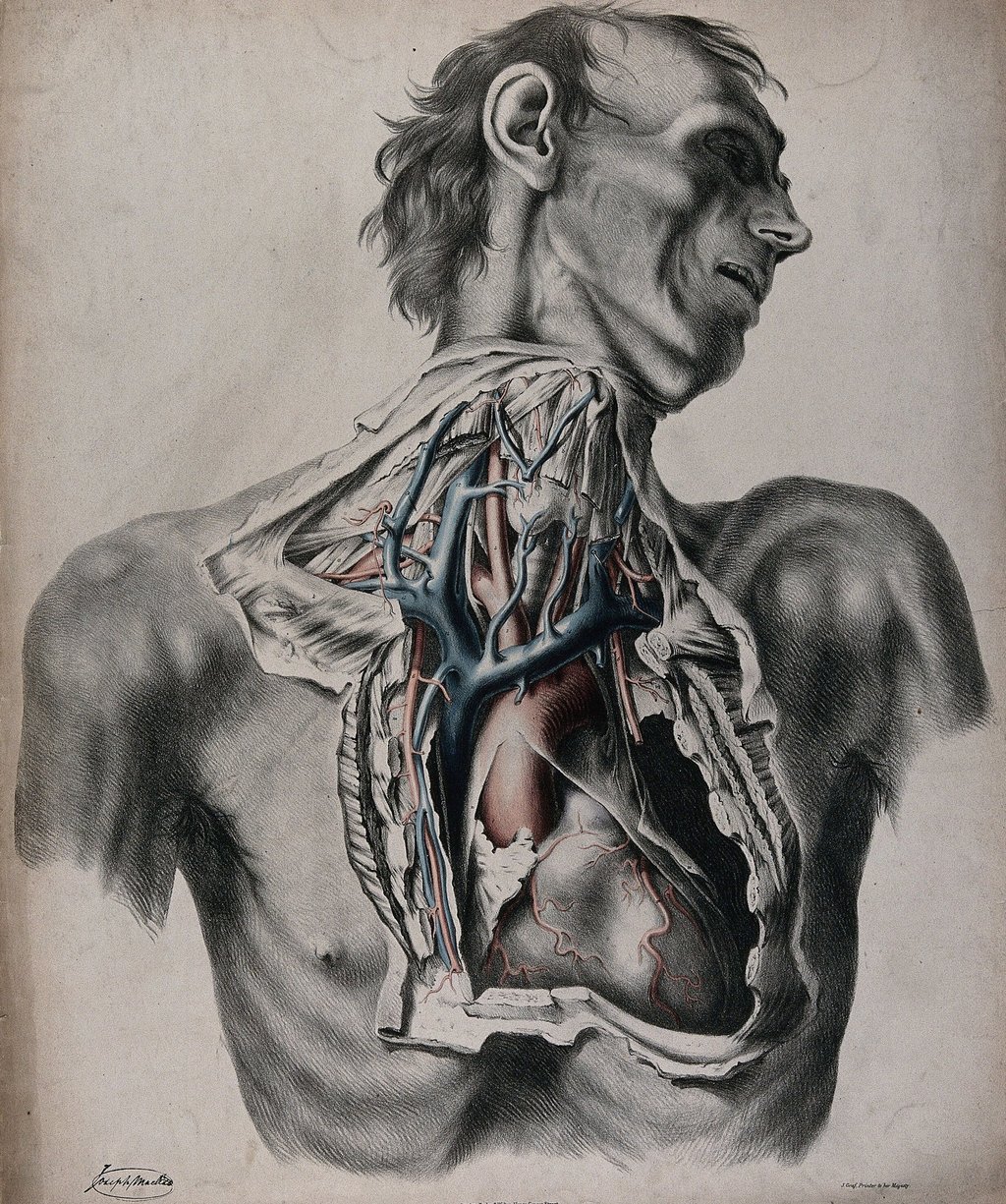
Artist: J.Maclise, coloured Lithograph, 1841/1844