Functionally Hybrid Minds: Rethinking Neurodivergence Through the Lens of Interspecies Inheritance
Explore ancestry through the lens of divergent genomic introgression
ANCESTRYBIOLOGY
Alexandra Chambers
2/12/20266 min read
For decades, neurodivergents have been pathologised without context - framed as disordered, deficient, or inherently dysfunctional. Yet emerging genetic evidence demands a radical reframe: what if these 'disorders' are the presentation of ancient functional genomic introgression?
Modern Homo sapiens are not a pure species. Around 40,000 to 60,000 years ago, early humans interbred with other hominin species - most notably Neanderthals and Denisovans. These weren’t one-off encounters; they resulted in functional, fertile interspecies hybrids whose descendants still carry traces of this genetic legacy today.
In non-African populations, approximately 1-4% of the genome is Neanderthal-derived. In some Southeast Asian and Melanesian groups, Denisovan DNA contributes an additional 4-6%. This process, known as interspecies hybridisation or interspecific introgression, has long been acknowledged in evolutionary biology. Only recently have scientific researchers begun mapping where these ancient genes land - and what they do.
Neanderthal-derived genes are disproportionately enriched in regions of the human genome associated with:
Skin and hair infrastructure (collagen...connective tissue differences).
Neural development and synaptic function
Immune response and regulation.
Sensory perception, particularly skin and pain sensitivity.
Circadian rhythm and sleep architecture.
Cognitive and neurological traits linked to autism and ADHD.
Far from being inert relics, these inherited sequences affect how we think, feel, and interact with the world. In some cases, they appear to correlate with traits frequently seen in divergent populations - including sensory hypersensitivity, altered social processing, and heightened pattern recognition. These are evolutionary artefacts, selected under different environmental pressures, and preserved through hybrid survival advantage.
Traits that once helped our hybrid ancestors navigate ice-age survival - through vigilance, hyperfocus, or heightened immune defence - have become liabilities in today’s overstimulating, industrialised society. Systems that favour standardisation, obedience, and cognitive conformity now label these traits as pathological. Worse, no model acknowledges their origin.
Despite mounting genomic evidence, the biomedical system is disconnected from evolutionary context. This amounts to a systemic misreading of biology: the pathologization of hybrid inheritance, and ancestralism. Within this framework I use "ancestralism" in a societal and systemic infrastructure context: not in reference to ancestor veneration, but to describe the institutional assumption that one ancestral or biological template represents the default human standard.
At some point in human history, a line was drawn - that placed humanity above the animal kingdom rather than within it. Humans began to see themselves as separate, superior, and exempt from the natural laws that govern every other living being. In doing so, something essential was forgotten: we are not that distinct - and biology still applies to us.
When people adopt animals - a dog, a cat, a horse - they instinctively ask questions:
What breed is this? What does it need? How do I care for it properly based on its (genomic) lineage and temperament?
A Bengal cat isn’t treated the same as a Ragdoll or tabby cat, even though it is still a cat. A Border Collie needs a different lifestyle than a Bulldog. We recognise that different breeds have different wiring, needs, and responses to the world.
Yet when it comes to humans, especially children, that same logic vanishes.
Instead of asking: What’s their genomic ancestry? What biological traits might shape how they process the world? How can we adapt their environment to meet their needs?
People often ask: Why aren’t they complying? What’s wrong with them? What label do they need?
This is the tragedy of human exceptionalism: in distancing humanity from animals, humans lost the humility that comes with recognising difference as natural. Instead, systems were built around the myth of uniformity - one-size-fits-all schooling, rigid behavioural norms, and medical models that punish variation rather than understand it.
Humanity is a tapestry of genomic divergence, biodiversity shaped by different evolutionary histories, environments, and survival pressures. This is just like every other species on Earth.
To forget that is a form of systemic and industrial-induced amnesia.
If divergence is the expression of functional interspecies ancestry, then many individuals today are not disordered - they are biologically distinct. They have functionally hybrid minds - carrying fragments of Neanderthal and Denisovan cognition in a sapiens-dominated system that was never built for them. They also have hybrid bodies that require different environments to the typical. This demands a shift in how we frame those challenges - from internal defect to ecological and ancestral mismatch.
Divergents are evolutionarily complex, shaped by an ancient tangle of hybridisation, survival, and adaptation. To pathologise that is not just a scientific error; it is a form of erasure.
Intelligence, Architecture, and the Legacy of Divergence
For much of modern history, the figure of the Neanderthal has functioned as a symbol of what we imagine ourselves to have transcended from. Popularised reconstructions depicted a lumbering brute, heavy-browed and vacant-eyed, only partially human. This imagery served more than aesthetic purposes; it reinforced a narrative of linear human progress, casting Homo sapiens as the sole bearers of intelligence, culture, and evolution's favour. The science now tells a more nuanced story - one that challenges the very foundations of this evolutionary mythology.
It is now firmly established that Neanderthals were not a separate evolutionary misstep but an intimately entwined branch of the human lineage. Genetic evidence confirms that interbreeding occurred between Neanderthals and anatomically modern humans tens of thousands of years ago, producing fertile offspring and leaving a lasting imprint on the human genome. Approximately 1- 4% of the DNA in non-African populations is of Neanderthal origin. Many of the introgressed regions found in loci related to immunity, neurological function, sensory perception, and brain development. This was not incidental; these sequences persisted because they conferred functional value.
Indeed, when Neanderthal DNA is concentrated in functional domains - as it is in some individuals - its persistence across multiple systems can form a distinct genomic signature. Given that genes operate not in isolation but in interdependent cascades, inherited Neanderthal sequences in one region (e.g. sensory regulation) often correlate with related patterns in others (e.g. neurotransmission, immunity). In this light, the presence of 4% Neanderthal DNA, particularly when mapped to functionally active regions, represents a robust continuation of hybrid neurological architecture.
I carry 4% Neanderthal DNA - well above average - with confirmed clustering in functional domains. This living legacy reflects a biologically coherent and evolutionarily persistent trait cluster.
Anatomically, the Neanderthal brain was not merely comparable to modern humans - it was, in absolute terms, larger. With an average cranial capacity of 1,500 - 1,700 cm³ (compared to modern human averages of 1,300 -1,400 cm³), their brains occupied a space that allowed for significant neurological complexity. Importantly, this expansion was not uniform. Digital reconstructions suggest Neanderthal brains were architecturally distinct, with hypertrophied occipital lobes and expanded visual cortices. Their parietal and temporal regions - associated with spatial reasoning, memory, and sensory integration - were also notably developed. What emerges is not a portrait of deficit, but of difference: a brain wired not for abstract generalisation or rapid linguistic exchange, but for depth-focused environmental interaction, spatial fluency, and somatosensory precision.
Recent archaeological discoveries reinforce this neuroanatomical reading. Neanderthal sites across Europe reveal complex tool use, controlled fire, pitch production from birch bark, symbolic behaviour through ochre and ornaments, and formal burial practices. The cognitive substrate required for these behaviours indicates planning, cooperation, aesthetic awareness, and social attachment- capacities long denied to our Pleistocene kin.
Where, then, did the caricature of the Neanderthal brute arise? Largely from misinterpretation and bias. The first Neanderthal skeleton discovered in 1856 was compared not to a holistic understanding of palaeoanthropology (which did not yet exist), but to 19th-century European ideals of human form and intellect. The narrative of the stupid Neanderthal cemented itself not through evidence but through repetition, reinforced by early paleoartists and anthropologists seeking to affirm the supremacy of modern man.
Herein lies the deeper wound: the same traits now recognised in the Neanderthal - pattern processing, heightened sensory perception, a proclivity for precision over abstraction - are those frequently pathologised in modern neurodivergent populations. Traits associated with autism, ADHD, or sensory processing differences are not aberrations of development. They are the expression of ancient neurological architecture, inherited through interspecies hybridization.
Compounding this is a larger epistemological failure: we have been systematically trained to view divergence itself as pathology. Single nucleotide polymorphisms (SNPs), gene variants, and alternative biochemical routes are framed as errors to be corrected, rather than natural outcomes of evolutionary pluralism. These so-called anomalies are divergent trajectories - deeply encoded strategies for resilience, adaptation, and difference. These genes are not malfunctioning; they are in conflict with an environment that assaults us via industry. This is not disorder; it is biological tension, and it is an evolutionary mismatch.
To explore the Neanderthal as neurologically complex is to correct a foundational error. Neanderthals were not less evolved, nor were their cognitive pathways inferior. They were divergent, in structure and emphasis. Their extinction may have owed more to climatic volatility and demographic bottlenecks than to any deficit in intelligence or adaptability. In fact, their continued presence in our genome suggests the opposite: integration, not failure.
Understanding Neanderthal cognition forces us to confront the narrowness of our definitions. Intelligence, in the industrial model, favours abstraction, rapid verbal communication, and behavioural conformity. This is a contingent standard, and not a universal one. Neanderthals may have embodied a slower, denser, more embodied intelligence - one grounded in the land, in sensory nuance, in quiet mastery rather than social display. If that architecture persists in some of us today, the question is not how to suppress it, but how to respect and recontextualise it.
The Neanderthal genomics live on, partially and powerfully, in the (neuro)divergent present. Ancestry, not disorder.
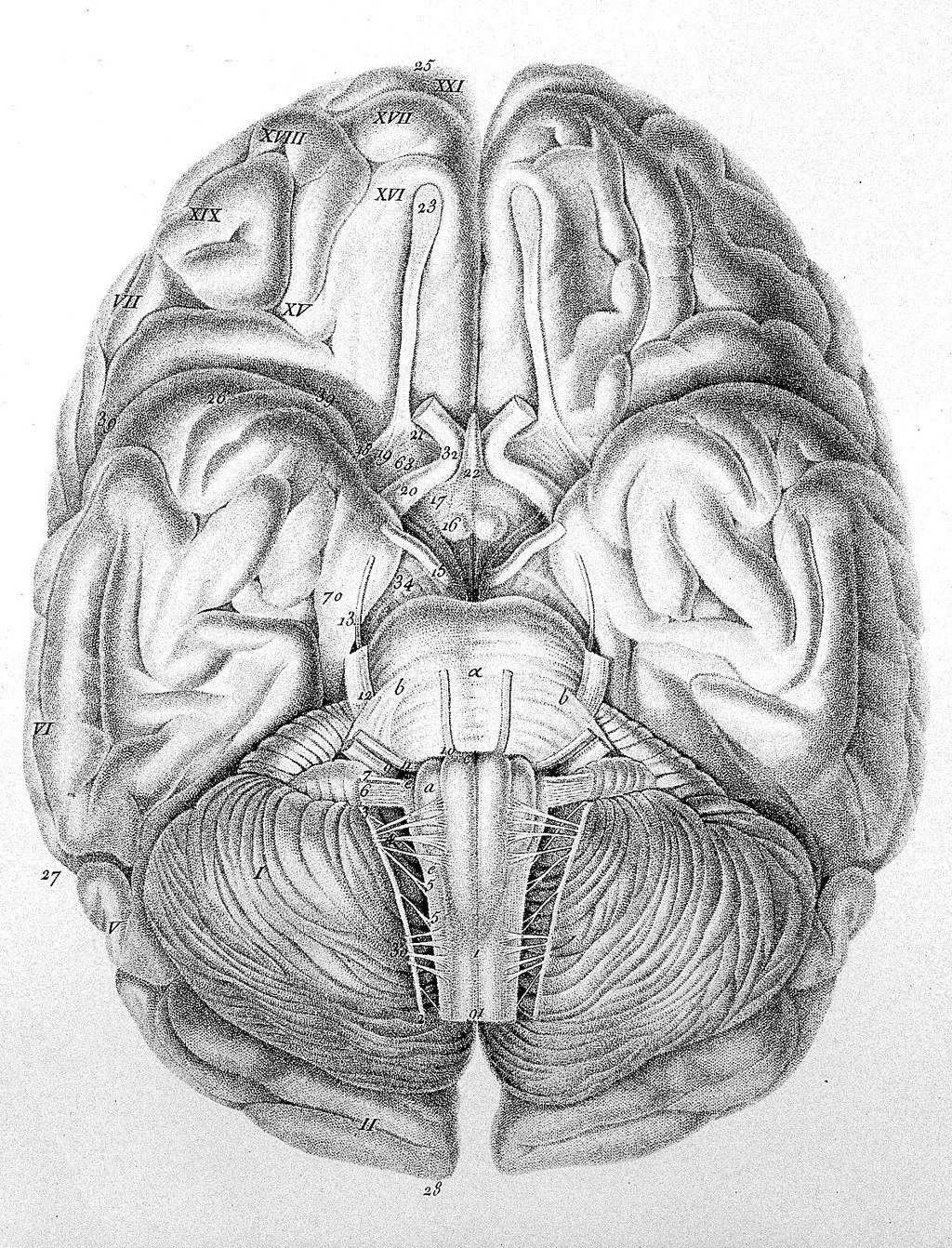
Artist: F.J. Gall & J.C. Spurheim, Anatomie et physiologie...., 1810