
Cesarean-Section Birth: Newborn Microbial Inheritance, and Divergent Vulnerability
This piece explores how altered early microbial inheritance may place additional strain on some infants, especially those with immune, gut, or connective-tissue divergence
PREGNANCYREPRODUCTIVE HEALTH
Alexandra Chambers
6/9/20264 min read
Autism is a psychiatric diagnostic term representing a neurodevelopmental form of divergence. This divergence is shaped by an inherited spectrum of divergent genomics, including - but not limited to - neurological, sensory, immune, metabolic, and connective-tissue architecture. Yet it is typically diagnosed through the visible, quantifiable presentation of cumulative environmental strain, rather than understood as an inherent divergent way of being.
Importantly, genomic divergence does not exist separately from biological context. The early-life environment - including birth physiology, microbial exposure, feeding, antibiotic use, inflammation, and immune signalling - do influence how a divergent child experiences gastrointestinal, immune, sensory, or inflammatory burden.
C-section birth is a vital surgical intervention when medically necessary, and it has likely saved lives, however, it is not biologically equivalent to vaginal birth. A baby born vaginally encounters maternal vaginal, gut-associated, skin, and environmental microbes during and immediately after delivery. This microbial exposure is one of several early-life events that help shape the developing infant microbiome.
A baby born by C-section may begin life with a different pattern of microbial colonisation, often involving reduced early exposure to maternal vaginal and intestinal organisms and greater influence from skin, hospital, or environmental microbes. Many C-sections may be necessary, and mothers may feel they have little meaningful control over the circumstances of birth. The practical issue is whether the biological consequences of surgical birth are being adequately recognised, discussed, and addressed.
A growing body of research suggests that infants born by C-section may show differences in early gut microbiome development, including altered patterns of Bifidobacterium and Bacteroides colonisation. The infant microbiome continues to be shaped by breastfeeding, colostrum, skin-to-skin contact, antibiotics, siblings, household ecology, diet, and wider environmental exposure. Nevertheless, the early microbial starting point may still matter, particularly for infants whose underlying biology is already more sensitive.
Bifidobacterium is especially relevant because certain infant-associated strains are adapted to metabolise human milk oligosaccharides and contribute to early gut and immune development. These bacteria are involved in maintaining gut barrier function, influencing inflammatory tone, and supporting immune maturation. Their absence or depletion may be one factor that increases physiological strain in susceptible children, especially those already prone to gastrointestinal problems, immune reactivity, mast-cell activation, food intolerance, or inflammatory sensitivity.
The microbiome does not create autism in an inherent sense. However, microbial disruption may affect the terrain in which a divergent nervous system develops. Supporting the microbiome should therefore be understood as a way of reducing physiological burden. This is where certain populations require a more precise framework: Many divergent individuals experience connective-tissue differences, gastrointestinal vulnerability, autonomic dysregulation, mast-cell reactivity, migraine, sensory sensitivity, immune irregularities, and metabolic strain. These patterns suggest that, at least for some individuals, divergence is multisystemic rather than purely neurological.
Microbiome disruption may therefore not affect all infants equally. Some babies may be resilient to altered early colonisation, while others may be more vulnerable because of their existing genetic and physiological context. The question is whether specific subgroups are more susceptible to the consequences of that disruption.
Connective-tissue divergence adds another layer to this discussion. Collagen and connective tissue influence far more than joints and skin. They contribute to fascia, ligament structure, pelvic mechanics, uterine support, tissue elasticity, wound healing, proprioception, and birth mechanics. In hypermobility and Ehlers-Danlos syndromes, pregnancy and birth can involve additional complexities, including pelvic instability, tissue fragility, premature rupture of membranes, anaesthetic issues, bleeding, and recovery difficulties.
It is therefore reasonable to ask whether some neurodivergent or connective-tissue-divergent families may be more likely to experience birth complications that result in C-section. Breech presentation, for example, can occur for many reasons, and it would be inappropriate to reduce it to one mechanism. However, repeated patterns within families may warrant more serious biological interpretation, particularly where connective-tissue features are also present.
Breech presentation can appear repeatedly across several generations. I do not present this as proof of a universal collagen-breech mechanism. Rather, I offer it as an example of the kind of inherited birth pattern that is often treated as incidental, when it may reflect deeper connective-tissue, pelvic, uterine, or developmental factors that deserve investigation.
This raises an important possibility: some babies who are more likely to be born by C-section because of inherited birth-mechanics or connective-tissue factors may also be among the babies most vulnerable to altered microbial colonisation. Therefore, the population most likely to miss the microbial passage of vaginal birth may overlap with the population most likely to need that microbial support.
This does not mean that C-sections should never happen. It means that when they do happen, particularly for medically necessary reasons, postnatal care should consider what has been biologically bypassed. Birth is a mechanical, hormonal, immunological, microbial, and ecological event. If one part of that process is interrupted, it is reasonable to ask whether some form of restoration or support should follow.
Vaginal seeding is one proposed intervention. It involves transferring maternal vaginal fluid to the baby after C-section, usually by applying it to the infant’s mouth, face, or skin. The rationale is that it may partially restore microbial exposure that would have occurred during vaginal birth.
Current medical caution around vaginal seeding is largely based on safety concerns, particularly the potential transfer of pathogenic organisms. These concerns are not baseless in contexts where infection risk is present. However, they should not lead to the automatic pathologising of vaginal microbial exposure itself. Vaginal birth naturally involves microbial transfer. The more constructive question is how to accomplish microbial restoration in a safe, appropriate, and beneficial way.
A progressive approach would be to develop screening and restoration protocols. If maternal infection risk is present, vaginal seeding may not be appropriate. If risk is low and screening is clear, carefully designed microbial transfer may deserve more serious investigation. In addition, microbial restoration does not have to rely on vaginal seeding alone. It could include targeted infant Bifidobacterium support, colostrum prioritisation, breastfeeding support where possible, human milk oligosaccharide support, careful antibiotic stewardship, immediate skin-to-skin contact, and follow-up for infants showing early gut or immune distress.
The broader point is that C-section care should not end with safe delivery. Surgical birth may be necessary in some contexts, but it may also alter early microbial development. A mature medical model should recognise the necessity of C-section in specific circumstances while also acknowledging that the infant may require additional ecological support afterwards.
This is especially important in the context of divergent infants. Autism and related forms of divergence are genomic and multisystemic, therefore early biological stressors should be understood as modifiers of health. A disrupted microbiome may contribute to gut pain, inflammation, feeding difficulties, immune reactivity, sleep disruption, sensory distress, and developmental strain. These burdens inevitably produce distress signals, which may then influence behaviour, regulation, and subsequently lead to clinical psychiatric presentation.
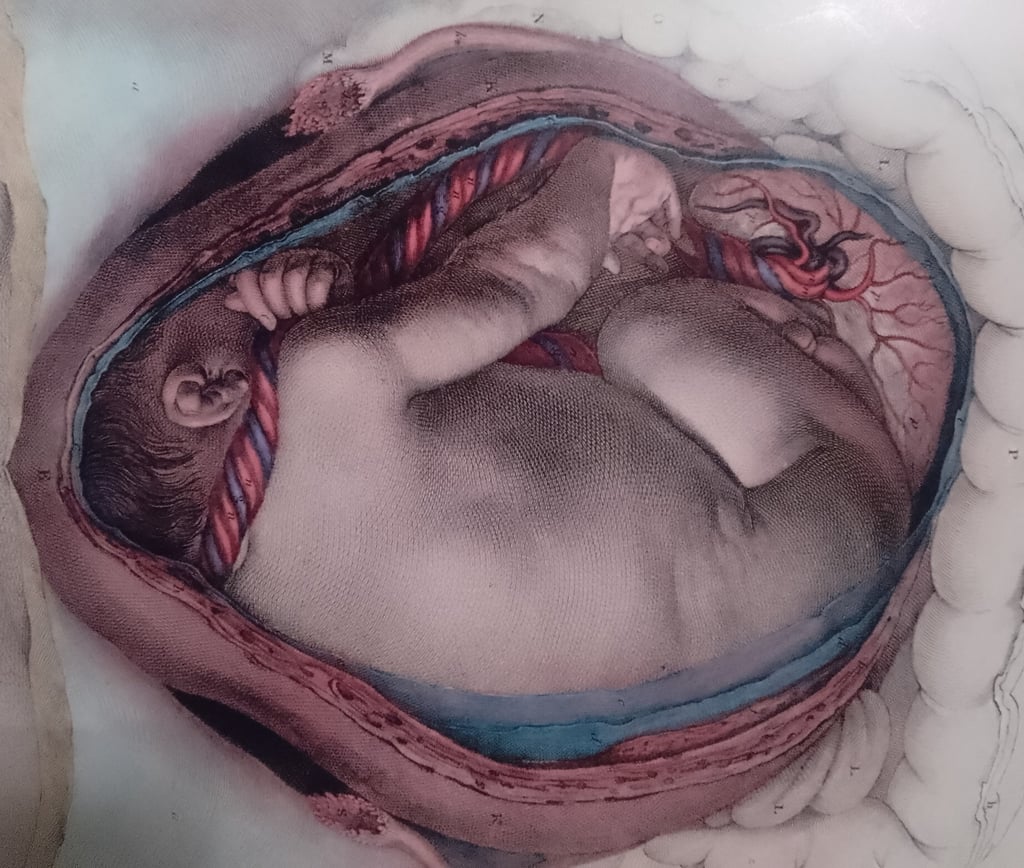
Artist: J.Lizar A System of Anatomical Plates of the Human Body 1822-6