
Beyond BPD: Emotional Dysregulation, Neurodevelopmental Divergence, OXTR and the Misclassification of Complex Architecture
An article discussing recent research on ADHD and the neurobiological, systemic and practical implications
PSYCHIATRYPSYCHOLOGYSYSTEMSBIOLOGY
Alexandra Chambers
5/11/202610 min read
For decades, intense emotional dysregulation has been poorly understood. In women and girls especially, it has often been interpreted through the language of personality disorder: unstable, dramatic, manipulative, impulsive, attention-seeking, emotionally excessive. The diagnostic label may change depending on the clinician, the era, or the service, but the pattern is familiar: a highly reactive nervous system is reduced to a behavioural problem, and the person carrying it is treated as if their distress reflects character pathology rather than regulatory overload.
This article proposes a different interpretation.
Some presentations currently labelled as borderline personality disorder or emotionally unstable personality disorder (BPD/EUPD) may, in a significant subgroup, represent misclassified neurodevelopmental and trauma-shaped regulatory divergence. This suggests that these features may be the surface expression of a deeper biological architecture: a nervous system built around high reactivity, rapid escalation, impaired down-regulation, sensory overload, threat sensitivity, and prolonged recovery after activation.
A recent neuroimaging paper by Pan et al. (2026) in JAMA Psychiatry strengthens this perspective. The study identified three ADHD biotypes using morphometric similarity networks, including a “severe-combined with emotional dysregulation” biotype. This group showed the most significant clinical profile and distinct brain-network alterations involving medial prefrontal cortex-pallidum circuitry, regions relevant to emotional regulation, inhibition, action selection, and regulatory control. The study did not claim that this subtype is borderline personality disorder/ emotionally unstable personality disorder (BPD/EUPD) but it does something important: it places emotional dysregulation inside neurodevelopmental architecture rather than outside it as a separate personality defect.
Phenotyping can be useful, but it becomes problematic when it reduces complex, context-dependent human variation into isolated traits or categories, stripping those traits from the broader system that produced them. That said, I wanted to share these specific findings with my own analysis and nuance attached.
Many people, particularly women and girls, have long been told that their emotional storms are evidence of a disordered personality. Yet the same phenotype can be read differently if the question changes. Instead of asking, “What is wrong with this person’s personality?” we can ask, “What regulatory system is failing, and why?”
Once ADHD is understood as a set of divergent regulatory architectures rather than a simple deficit, the meaning of dopamine changes. Dopamine is part of a wider state-regulation system involving reward prediction, salience, movement, learning, novelty detection, effort allocation and adaptive behavioural switching. In some ADHD biotypes, the issue may not be an innate absence of dopamine, but higher dopamine demand, faster turnover, unstable regulation, or greater dependence on environmental conditions to maintain functional output. The person may be operating a high-throughput system with greater maintenance requirements.
This becomes especially important when ADHD is considered alongside variation in the amygdala, hypothalamus and oxytocin receptor signalling. The amygdala is often reduced to fear processing, but its deeper function is salience: it helps determine what matters, what is threatening, what is emotionally meaningful, and what should be prioritised. The hypothalamus then translates salience into a bodily state. It coordinates circadian rhythm, stress hormones, autonomic tone, appetite, temperature, sleep-wake timing, endocrine signalling and aspects of social bonding through its relationship with the oxytocin system. Together, the amygdala and hypothalamus sit at the interface between perception, social meaning, survival physiology and behavioural output.
OXTR, the oxytocin receptor gene, adds another layer of complex reality to this model. Oxytocin signalling is involved in social cognition, attachment, trust, stress buffering, bonding and emotional regulation. Studies have linked OXTR variation with social cognition in (Au/) ADHD, and broader oxytocin research has connected OXTR polymorphisms and methylation patterns with social and emotional functioning. OXTR variants have also been associated in neuroimaging work with differences in amygdala reactivity, amygdala-related social processing and stress sensitivity.
This strongly suggests that some (Au/)ADHD or divergent biotypes may involve altered social-salience regulation. In such individuals, the brain may be especially sensitive to relational safety, inconsistency, hierarchy, rejection, coercion, unfairness, social incoherence and environmental mismatch. The amygdala detects salience; the hypothalamus converts that detection into physiological state; OXTR modulates bonding, trust and social stress; dopamine helps drive motivation, novelty, action and reward prediction. When this system is stable, it may produce exceptional pattern detection, rapid learning, social insight, creative problem-solving and high adaptive intelligence. When it is unsupported, the same system may become overwhelmed, dysregulated, avoidant, impulsive, exhausted or emotionally reactive.
A divergent brain may be capable of intense focus, but only when safety, interest, novelty, timing, sensory conditions and internal metabolic state align. This is akin to state-dependent performance.
The social environment is therefore not secondary; it is biologically active. For a person with amygdala-hypothalamic and oxytocin-related variation, the social world may directly affect autonomic state, dopamine demand, circadian rhythm, stress hormones, emotional regulation and executive function. A hostile classroom, coercive workplace, dishonest institution or chronically invalidating relationship is not merely unpleasant; it may impose a measurable regulatory cost. The individual is then expected to self-regulate inside an environment that is actively dysregulating them.
This is where the deficit model fails most obviously; it locates the problem inside the individual and asks how that individual can be corrected. The advanced systems model asks whether the environment itself is mismatched to the biology of the person. It recognises that for some divergent profiles, social trust, autonomy, sensory coherence, fairness, relational safety and circadian stability are necessary regulatory inputs.
This also explains why some (neuro)divergent individuals appear driven toward social redesign. Under the right circumstances, OXTR/ ADHD biotypes may predispose a person to be at higher likelihood of contributing to/seeking societal change. Genes do not operate as destiny, however, it is reasonable to propose that brains with heightened salience detection, altered social-bonding sensitivity, increased stress responsivity and high state-dependence may be less able to tolerate incoherent or unjust environments. They may not simply adapt to social dysfunction; they may detect it, feel it physiologically, and become compelled to challenge it. The drive toward environmental or societal change may emerge from embodied neurobiology.
The dopamine-glutathione-neuromelanin model adds a further biochemical dimension. Dopaminergic neurons are chemically vulnerable because dopamine can oxidise into reactive quinones and related compounds. Glutathione helps neutralise reactive dopamine by-products, while neuromelanin can sequester dopamine-derived oxidation products and metals. This means neuromelanin is better understood as a containment system that may be protective when balanced, but problematic if overloaded or released during neuronal injury. Still, the broader principle is important: high dopamine turnover and chronic arousal may carry oxidative and metabolic costs. A high-demand regulatory system may therefore require stronger support for sleep, light timing, minerals, protein, methylation, antioxidant capacity and reduced toxic burden.
Intervention should involve environmental redesign on a macro evolutionary scale: natural sunlight exposure and sleep timing, reduced sensory overload, safer social structures, clear autonomy, less coercion, predictable routines, meaningful work, trustworthy relationships, cleaner food and air, and educational systems that recognise state-dependent cognition. For some divergent individuals, support means reducing unnecessary regulatory burden so that the underlying capacity can emerge.
The emotionally dysregulated ADHD biotype is closer to a whole-system regulation problem. The person may experience rapid ignition, intense distress, impulsive speech or action, heightened threat response, rejection sensitivity, sensory overwhelm, difficulty shifting state, and prolonged failure to return to baseline. From the outside, this can look like an overreaction. Internally, it may feel like the nervous system has already crossed the threshold before conscious control has had time to intervene. This is more visibly apparent in young neurodivergent children.
A child who throws objects, attacks, screams, or becomes physically unsafe is not simply being naughty. An adult who becomes flooded, defensive, panicked, or enraged under relational threat is not necessarily displaying a fixed personality defect. These may be signs of a regulatory system with insufficient braking capacity relative to the intensity of activation.
In this model, the problem is not only attention; it is control. The question is whether the nervous system can tolerate activation without tipping into overload.
That explains why stimulant medication can produce such mixed outcomes in children (and adults). A stimulant may improve the focus layer while worsening the reactivity layer. The person may concentrate better, but become more aggressive, more volatile, more impulsive, more dangerous, or less able to recover from frustration. In those cases, the medication has produced partial cognitive benefit with unacceptable regulatory destabilisation.
The deeper issue is that clinical systems often still privilege attention and behaviour over safety, arousal, sensory state, and emotional regulation.
For some children, the relevant observation would be:
The stimulant improved focus but caused marked escalation in aggression, object-throwing, and physical attacks, creating an unacceptable safety risk.
This means the parent is not being difficult, anti-medication, or non-compliant; they are reporting a serious adverse behavioural response.
The overlap between emotionally dysregulated neurodevelopmental presentations and BPD/EUPD is obvious. Both can involve intense affect, impulsivity, rejection sensitivity, relational conflict, self-destructive behaviour, anger, dissociation, and instability under stress.
BPD/EUPD describes behavioural patterns, but it often fails to explain the mechanisms producing them. Worse, once applied, the label can contaminate systemic and social interpretation. Pain becomes attention-seeking, fear becomes manipulation, advocacy becomes difficult behaviour. Anger becomes splitting, distress becomes drama, Overload is translated as a personality flaw.
This is especially dangerous for those with ADHD, autism, trauma histories, sensory sensitivity, or inherited emotional intensity. Their dysregulation may be interpreted through a psychiatric lens that sees distress as unstable personality rather than neurological dysregulation.
A more accurate formulation would be:
Some individuals diagnosed with BPD/EUPD may represent an emotionally dysregulated neurodevelopmental phenotype, shaped by inherited regulatory sensitivity, trauma exposure, sensory overload, autonomic instability, and chronic misattunement.
This means the 'personality disorder' diagnostic category may be too broad, too surface-level, and too detached from developmental biology.
This becomes even clearer when the same pattern appears across generations. If a grandmother, mother, and child all show high emotional intensity, rapid escalation, rejection sensitivity, sensory overwhelm, impulsive distress, potential stimulant mismatch, and repeated BPD-type labelling, it makes sense to question whether there is an inherent regulatory phenotype.
That phenotype may include inherited differences in dopaminergic, serotonergic, noradrenergic, cholinergic, histaminergic, immune, endocrine, autonomic, connective tissue, or sensory-processing systems. The JAMA Psychiatry paper did not directly test genetics, epigenetics, or inheritance, but it did identify neurobiological markers in structural brain-network organisation and noted spatial associations with neurotransmitter systems including serotonin, dopamine D2, acetylcholine, and histamine H3 maps.
That is compatible with the central argument: emotional dysregulation is largely embedded in neurobiological architecture.
The lived pattern is often this: Dysregulation is more profound in childhood and adolescence; it persists into adulthood, but the person may learn to manage it better (but they also may not - this is unique to the individual).
This is most accurately described as persistent, but increasingly compensated. With age, some people develop increased self-knowledge, avoidance strategies, sensory control, communication scripts, recovery routines, environmental boundaries, and pattern recognition. The ignition system remains, but the person learns how to manage the fuel that is thrown upon it.
Children do not have that scaffolding - they are trapped in school systems, family routines, sensory environments, adult demands, transitions, hunger, fatigue, screen dysregulation, and social pressure. They cannot redesign their lives around their nervous systems. So the raw phenotype is more visible, more dangerous, and potentially mislabelled.
There is another layer: trauma.
The hypothesis here is that trauma does not merely produce psychological wounds. Repeated, severe, or developmentally timed trauma may produce epigenetic structural divergence in neurological architecture. Trauma can recalibrate stress-response systems, threat detection, autonomic tone, immune signalling, endocrine rhythms, sleep regulation, synaptic development, myelination, and gene expression. Reviews of childhood trauma and epigenetics describe links between trauma exposure and long-term changes in DNA methylation, histone modification, non-coding RNA regulation, brain physiology, and behaviour. Studies have also linked averse childhood experiences with differential methylation in brain-relevant pathways, including oligodendrocyte and myelin-related processes in the cingulate cortex.
This provides a biological bridge between experience and structure. Trauma does not need to alter DNA sequence to alter developmental outcome. It can change gene expression and regulatory calibration. Inherited neurodivergence and trauma-acquired divergence can converge on similar presentations. A child may be born with a high-reactivity system. If that child then experiences misattunement, punishment, sensory hostility, relational insecurity, institutional harm, or repeated overwhelm, the system may become further reorganised around threat.
The result is not simply ADHD plus trauma; it is a compounded phenotype:
inherited regulatory sensitivity + environmental threat + epigenetic recalibration = amplified structural divergence.
This may be one reason why BPD/EUPD labels cluster in families. What appears to psychiatry as personality pathology is likely inherited regulatory sensitivity interacting with repeated trauma, gendered interpretation, poverty, family stress, sensory overload, and institutional failure.
If the core issue is state regulation, then future therapies need to move beyond behaviour charts and attention-focused medication alone.
Some children appear instinctively drawn to frequency: sound, rhythm, vibration, repetition, humming, bass, music, light patterns, spinning, rocking, tapping, white noise, brown noise, or repeated clips. This should not automatically be dismissed as obsession or sensory seeking in a shallow sense. It may be the nervous system searching for external structure.
A dysregulated nervous system may use rhythm and frequency as scaffolding: My internal state is chaotic, so I need something patterned, predictable, tonal, or repetitive to organise me.
This is where sound and light therapies become serious future territory via targeted sensory-neuromodulation: controlled auditory and visual input used to influence arousal, circadian rhythm, autonomic tone, sleep-wake timing, attention networks, emotional recovery, and state-switching.
There are already early signals in this direction. Transcranial photobiomodulation, using near-infrared light as a non-invasive neuromodulation approach, has been reviewed as a promising but still emerging intervention for neurodivergent related emotional dysregulation support. This supports the broader principle that light-based neuromodulation is being taken seriously in neurodevelopmental research.
For emotionally dysregulated neurodivergence, the future focus should not be “make the child pay attention.” It should be: Stabilise the nervous system state so the child can safely access focus, learning, communication, and emotional control.
That may include circadian light regulation, reduced flicker exposure, careful screen management, auditory regulation, rhythm-based interventions, vibration, movement, pressure, sleep stabilisation, sensory-safe environments, and eventually more precise neuromodulation approaches.
The key to inclusion and thriving is personalisation. One child may calm with brown noise, bass vibration, darkness, and pressure, and another may worsen with low-frequency vibration but regulate with soft repetitive music. One may need morning light to stabilise the circadian rhythm, and another may need reduced evening light and protection from flicker.
The question is which frequencies regulate this nervous system without overstimulating it.
The old model says:
This person is emotionally unstable.
The progressive model asks:
What has shaped this person’s regulatory architecture?
The old model says:
This child is difficult.
The progressive model asks:
What state is this child in, what pushed them over the threshold, and what helps them return safely?
in conclusion, a subset of individuals currently diagnosed with BPD/EUPD may represent an emotionally dysregulated neurodevelopmental phenotype arising from inherited regulatory sensitivity, trauma-induced epigenetic recalibration, sensory-autonomic overload, and altered frontostriatal/prefrontal-limbic regulatory architecture. In these individuals, emotional instability may reflect structural and functional regulation-system divergence rather than personality pathology. The phenotype may be most significant in childhood and adolescence, persist across the lifespan, and become increasingly compensated with age through learned regulation strategies, environmental control, and sensory scaffolding. Standard stimulant treatment may improve attention while worsening affective reactivity in some individuals, indicating that future interventions should prioritise nervous-system stabilisation, sensory regulation, circadian support, and targeted neuromodulation.
The central shift is this: (Au/)ADHD is not a lesser brain failing to meet normal demands. It is a more sensitive, more reactive, more socially and environmentally contingent regulatory system being judged inside environments built for a narrower less complex neurological type. Once OXTR, the amygdala, hypothalamus, dopamine signalling, ADHD biotypes and social sensitivity are considered together, the conclusion becomes difficult to avoid: the environment is part of the mechanism.
References
Pan N, Long Y, Qin K, et al. Mapping ADHD Heterogeneity and Biotypes by Topological Deviations in Morphometric Similarity Networks. JAMA Psychiatry. 2026;83(5):478–490. doi:10.1001/jamapsychiatry.2026.0001
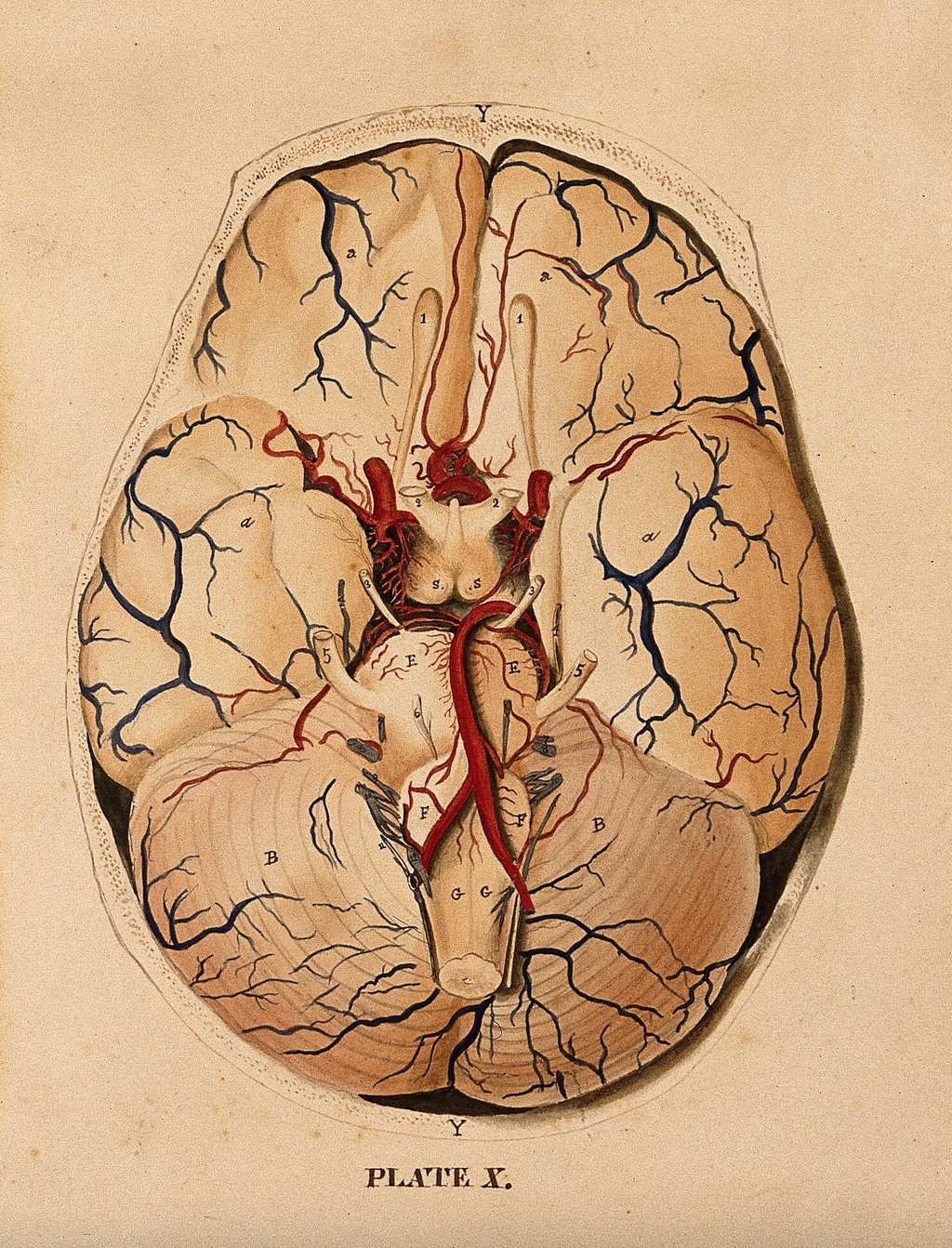
Artist: W.H. Lizars, ca.1826