
Alu Elements, Brain Complexity, and Regulatory Divergence
Explore how ancestrally derived regulatory variation impacts environmental tolerance
BIOLOGYANCESTRYEPIGENETICS
Alexandra Chambers
2/11/20264 min read
Modern humans outside Africa carry small proportions of Neanderthal DNA due to introgression. Importantly, not all introgressed DNA was retained; over generations, natural selection filtered which archaic segments remained in the human genome. Studies show that Neanderthal-derived DNA is unevenly distributed. It is depleted near some highly sensitive developmental genes and enriched in certain immune-related regions. This pattern reveals that much of what makes humans unique lies in how those genes are regulated. Among the most influential components of this regulatory system are Alu elements - small, repetitive DNA sequences found only in primates. Although once dismissed as 'junk DNA', Alu elements are now understood to play a substantial role in shaping human brain development, cognitive complexity, and, under toxic conditions, biological incompatibility.
Understanding Alu elements helps illuminate an important understanding: divergence in neurology or immune sensitivity is not inherently pathological. Rather, it may reflect a regulatory architecture that is powerful, flexible, and highly responsive - but also more sensitive to environmental disruption.
Alu elements are short stretches of DNA, about 300 base pairs long, that have copied and inserted themselves throughout the primate genome over millions of years. Humans carry over one million copies, making up roughly 10% of our DNA.
They do not code for proteins. Instead, they influence how nearby genes behave. They can:
Affect when genes turn on or off.
Modify how RNA is spliced (creating multiple versions of a protein from one gene).
Influence gene expression levels.
Interact with epigenetic mechanisms such as DNA methylation.
Alu elements are therefore the regulators of regulation, and help to fine-tune the system.
The human brain depends heavily on complex gene regulation; neurons must grow, branch, form synapses, and remodel connections throughout life. This requires extraordinary regulatory precision.
Alu elements are especially active in neural tissues. They contribute to:
Alternative splicing of brain-related genes.
Regulation of synaptic proteins.
Expansion of gene networks involved in cognition.
One important family of genes in this context is the SHANK genes (SHANK1, SHANK2, SHANK3). These genes produce scaffolding proteins that organize synapses - the junctions where neurons communicate. SHANK proteins help determine how stable and complex synaptic connections become.
The SHANK genes are large and rich in intronic (non-coding) regions. Such regions are statistically more likely to contain repetitive elements, including Alu sequences. Repetitive elements in introns can contribute to alternative splicing and regulatory diversity.
Synaptic genes are therefore examples of regulatory-heavy architecture. They depend on precise epigenetic control. Small disruptions in their regulation can influence dendritic branching, synaptic density, and neural plasticity.
Autism research has consistently implicated synaptic regulation, including mutations and copy-number variations in SHANK3. Separately, some studies have observed altered methylation patterns at repetitive elements, including Alu sequences, in autistic populations. These findings do not imply causation, but they point toward regulatory instability as a recurring theme.
Alu elements located near or within such genes can influence how these scaffolding proteins are expressed. This can affect:
Dendritic branching.
Synaptic density.
Neural plasticity.
In evolutionary terms, this regulatory flexibility likely contributed to the expansion of higher cognitive function in humans. Increased branching and plasticity support learning, pattern recognition, and adaptive reasoning.
Alu elements are not left unchecked, because they are repetitive and mobile by origin, the genome tightly regulates them through DNA methylation - chemical marks that silence or restrain their activity. When methylation control is stable, Alu elements contribute to fine-tuned regulation without causing instability.
However, methylation is sensitive to:
Nutritional status (e.g., folate metabolism).
Immune activation.
Chronic stress.
Environmental toxins.
Ageing.
If methylation control weakens, Alu elements can become overactive. This can lead to:
Disrupted gene expression.
Increased genomic instability.
Mitochondrial stress.
Inflammatory signalling.
In the brain, this dysregulation has been linked in research to transcriptional noise and neurodegenerative vulnerability. Individuals or populations with greater regulatory complexity - including variations in methylation genes or differences in inherited genomic architecture - are not born with faulty DNA. Rather, they possess a system that is:
More plastic.
More responsive.
More developmentally flexible.
More metabolically and epigenetically sensitive.
Such systems can generate:
Increased neural branching.
Heightened sensory processing.
Enhanced pattern detection.
Deep cognitive focus.
These are features of a high-plasticity system. However, a system that is more responsive is also more vulnerable to environmental overload. If modern exposures disrupt methylation balance or immune signalling, the same regulatory architecture that once enabled adaptive flexibility may become destabilised. This means that biological systems evolved in one environmental context may react differently in another.
Alu elements are ancient in primates, and they long predate modern humans. However, different human populations - including those with varying degrees of archaic admixture such as Neanderthal DNA - inherited distinct regulatory landscapes.
Some of these inherited regulatory patterns may influence immune response, brain development, and stress reactivity. The key point is not that any group possesses more or less valuable DNA, it is that genomic architecture varies, and regulatory variation has consequences.
Evolution optimizes for survival in specific environments, but it does not optimize for toxic modernity. To be clear, this is less 'natural selection' and more 'industrial selection'.
Alu elements are normally kept in check by DNA methylation, a biochemical mechanism that silences repetitive sequences and prevents genomic instability. When methylation control is stable, Alu elements contribute to gene regulation in subtle and often beneficial ways. They help fine-tune expression, influence RNA splicing, and contribute to the regulatory complexity that characterises the human brain. However, methylation can shift with age, environmental stress, inflammation, nutritional status, and genetic variation in methylation-related enzymes. When methylation weakens, repetitive elements can become more transcriptionally active. In certain contexts, this may strain energy metabolism within neurons. Therefore, the relevant contrast between individuals or populations is how robustly these elements are regulated.
Alu elements illustrate a broader truth about biology:
Complexity enables intelligence.
Plasticity enables adaptation.
Sensitivity enables perception.
However, all three require regulatory stability; when regulation is intact, complex systems flourish. When regulation is disrupted - by chronic stress, metabolic strain, or environmental mismatch - highly sensitive systems may show strain earlier or more visibly.
This perspective reframes divergence as context-dependent biology. It suggests that susceptibility to injury is not inherent weakness, but evidence of a system that is finely tuned - and therefore requires careful stewardship. The scientific task is not to pathologize these systems, but to understand them - and to ensure that modern environments do not overwhelm regulatory architectures that evolved under very different conditions.
Alu elements illustrate a broader biological principle; evolution frequently builds complexity through layers of regulation. The same genomic features that enabled the expansion of primate cognition - including repeat-driven regulatory networks - require careful epigenetic oversight.
Divergence represents a high-resolution regulatory architecture: capable of extraordinary complexity and adaptability, but this is dependent on environmental compatibility.
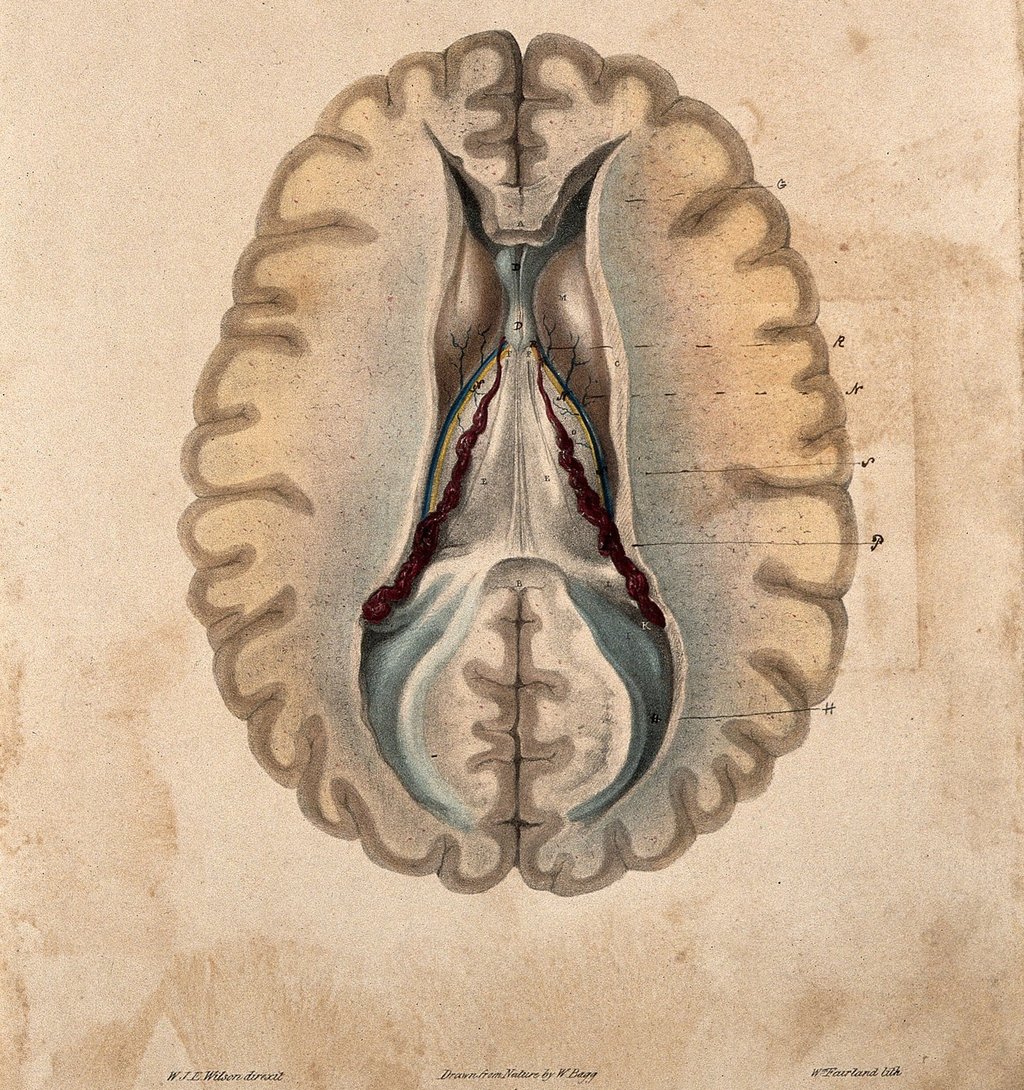
Artist: william Fairland, 1839, after W.Bagg after W.J.E Wilson